Bulb Selection
Replace cool-white or daylight bulbs in bedside and bedroom lamps with warm-white variants rated 2200–2700K. Standard LED options are widely available.
A structured guide to adjusting the light in your bedroom environment across the evening — from task-level brightness to minimal ambient warmth — to ease your space into a calmer state.
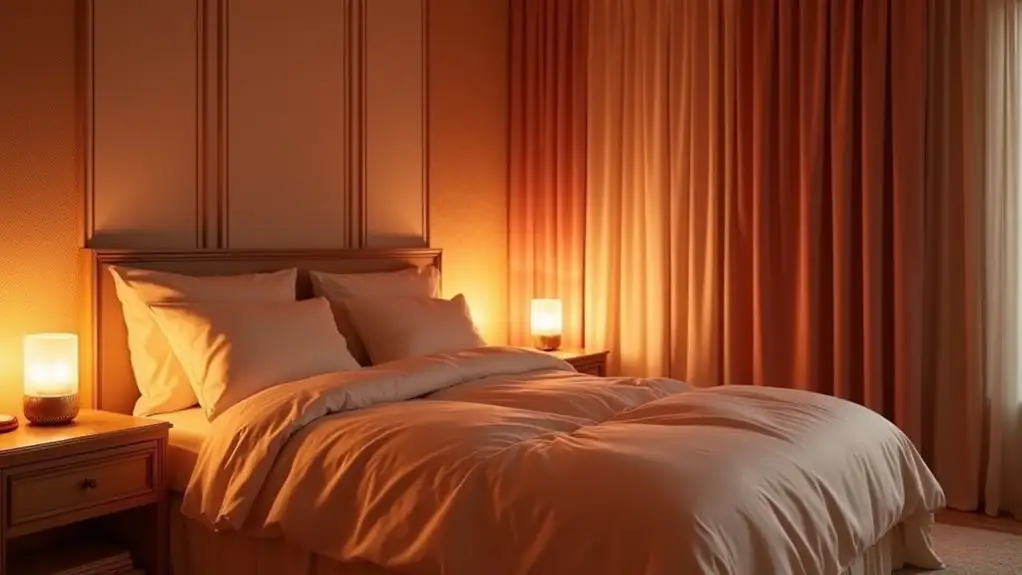
Bright or blue-rich light in the evening is widely associated with feeling more alert. By progressively reducing light intensity and shifting to warmer tones, you allow your environment to align more closely with the natural dimming of the day.
Follow this sequence as a starting point. You can adjust each phase timing to fit your personal schedule, shifting the entire sequence earlier or later by 30–60 minutes as needed.
Full Task Lighting
Normal working brightness for kitchen, desk, or reading. Overhead lighting acceptable at this stage.
Reduced Overhead, Warm Accent
Switch off ceiling lights. Use floor or table lamps set to warm tones. Dim to 50–60% of maximum output.
Low Ambient Mode
Single low-wattage lamp at 20–30% output. Screen brightness set to minimum. Avoid new overhead light activation.
Near-Dark Environment
All active lights off or minimal nightlight only. Blackout curtains drawn. Device screens dark or faced away.
These practical adjustments can be made to most standard bedroom configurations without specialized equipment.
Replace cool-white or daylight bulbs in bedside and bedroom lamps with warm-white variants rated 2200–2700K. Standard LED options are widely available.
Where possible, install a simple dimmer switch or use smart bulbs with adjustable output. Manual dimming gives you direct control over light levels throughout the evening.
Enable night mode or warm-shift settings on all devices from 7 PM onward. Most operating systems include a built-in blue light filter in display settings.
Blackout curtains or heavy drapes reduce streetlight and early morning intrusion. For partial coverage, a layered approach with sheer and blackout panels offers flexibility.
Light is only one part of your environment. Pairing it with appropriate sound management creates a more complete evening atmosphere.
All presented materials and practices are educational and informational in nature and are intended to support general well-being. They do not constitute medical diagnosis, treatment, or recommendation. Before applying any practice, especially if you have chronic conditions, consult a qualified physician.